
Concrete Surface Preparation in Sarasota, FL
More coating failures trace back to surface preparation than to the coating material itself. This is the step that determines whether a floor lasts years or fails within months.
Evaluating Existing Concrete
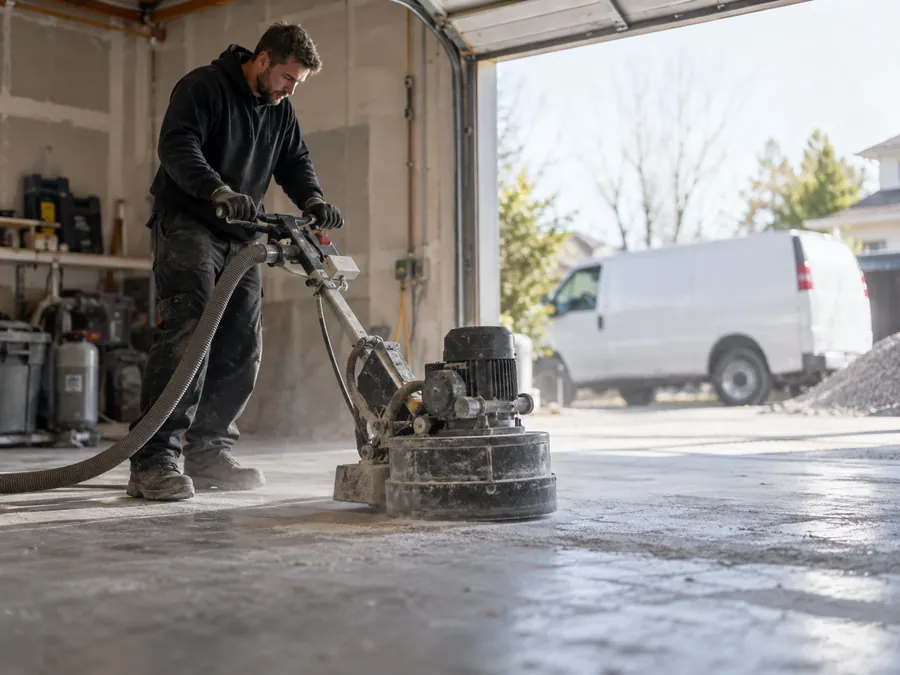
Every project starts with an honest look at the slab — its age, any prior coatings or sealers, visible contamination, cracking, and moisture condition. This evaluation determines the prep level required and which coating systems are realistic options, before any pricing or timeline is discussed.
Diamond Grinding & Old Coating Removal
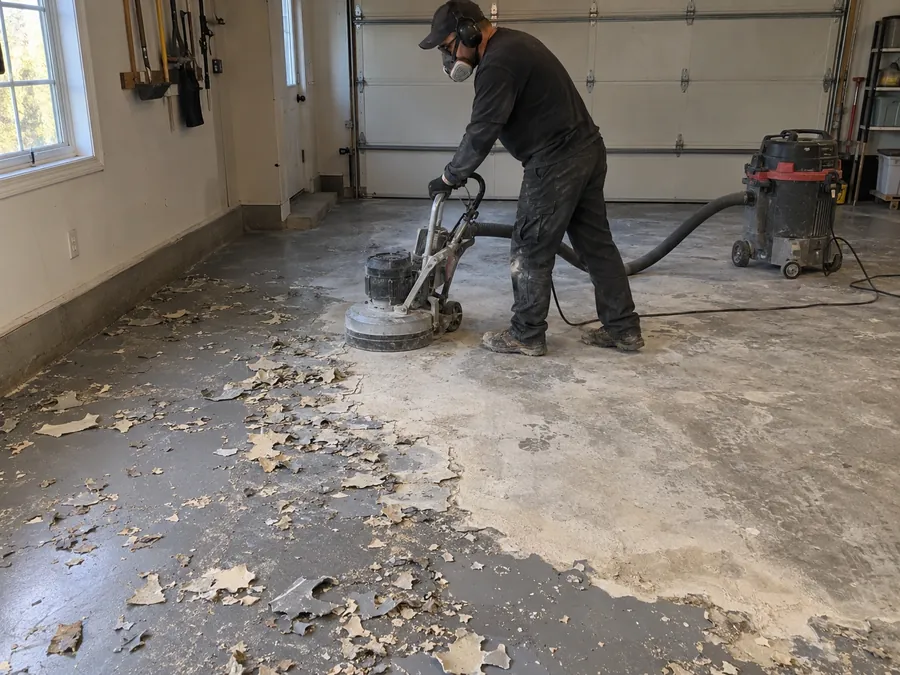
Concrete is naturally dense and smooth at the surface — too smooth for most coatings to mechanically bond to well. Diamond grinding opens a texture profile into the surface so the coating has something to physically grip, rather than sitting loosely on top the way paint does. Grinding also removes existing paint, sealers, or failed coatings that would otherwise prevent proper adhesion of a new system.
Contamination, Laitance & Adhesion
Oil, grease, curing compounds, and laitance (a weak, dust-like layer that can form on the surface of new concrete) all interfere with adhesion if left in place. These get identified and removed during prep — contamination is one of several distinct causes of coating failure, separate from moisture issues, and both need to be ruled out on any project.
Cracks & Damaged Concrete
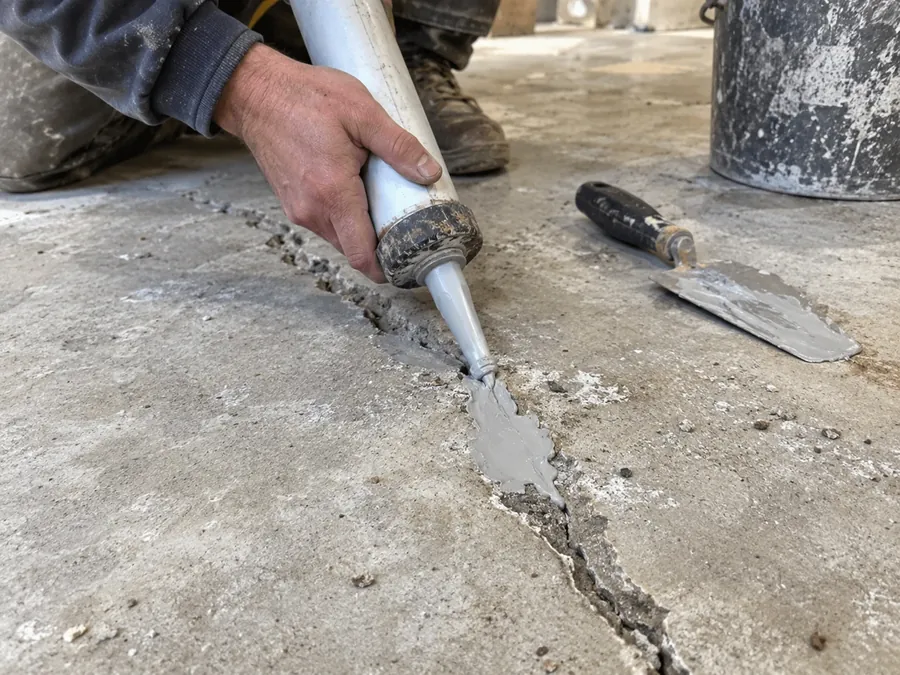
Minor cracks are routed out and filled with an appropriate repair material before coating. Cracks tied to ongoing structural movement, or slab sections with significant damage, need to be evaluated on their own terms — coating over an unstable crack typically results in that crack reflecting back through the finish within a relatively short time.
Moisture & Efflorescence in Sarasota's Climate
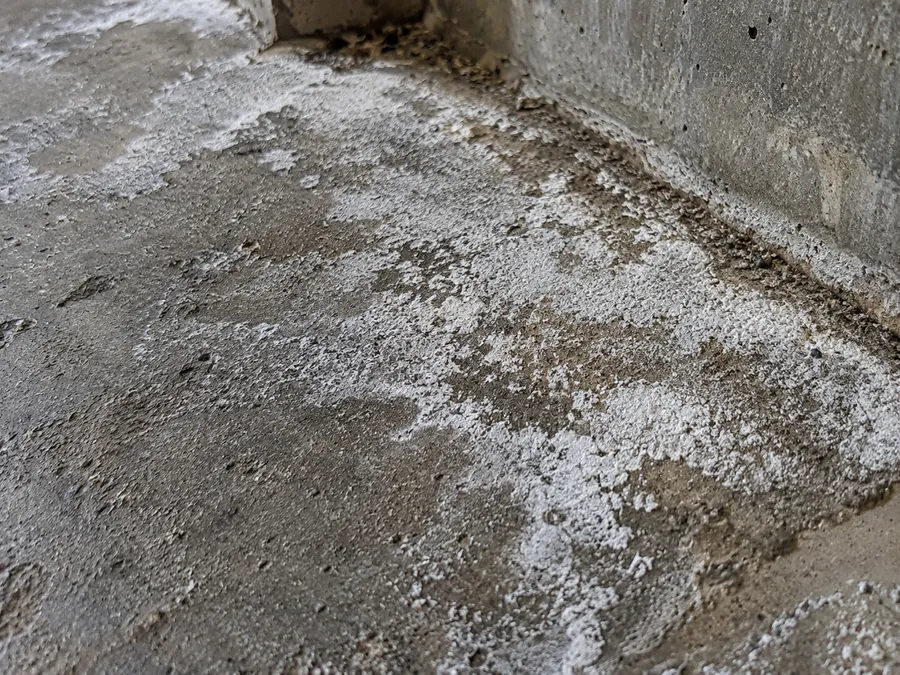
Florida's high water table, humidity, and frequent rain make slab moisture a real, ongoing consideration — not a rare edge case. Efflorescence, the white mineral residue left as moisture moves through concrete and evaporates, is a visible warning sign that gets addressed rather than coated over. We've seen homeowners come to us after a previous coating peeled on an older lanai where efflorescence had been present, and separately, after a coating bubbled following installation over concrete that had recent water exposure. Both situations reinforce the same lesson: moisture has to be checked and accounted for before coating, not discovered as a problem afterward.
Not every coating failure is a moisture failure — contamination, weak concrete, and skipped grinding cause problems too. Part of proper preparation is correctly identifying which factor actually applies to your slab, rather than assuming one cause for every issue.
Outgassing & Bubbles
Concrete is porous and can release trapped air or moisture vapor after being sealed by a coating — sometimes visible as small bubbles in the cured finish. This is more likely on a freshly poured or damp slab, or when installation happens without adequate cure time or drying beforehand. Correct timing and moisture assessment before coating are how this gets avoided.
When We Delay a Coating Project
Recent rain, high ambient humidity, or a slab that hasn't had enough time to dry are all legitimate reasons to push an installation date back rather than coat over conditions that would compromise the result. This isn't a scheduling inconvenience — it's the same preparation standard applied consistently rather than skipped under time pressure.
This Applies to Every Coating System
Surface preparation isn't specific to one coating type — it's the shared foundation behind every service we offer:
Garage Floor Coatings
See how prep applies to garage-specific projects.
Learn morePolyaspartic Coatings
Fast-curing systems still depend on proper prep.
Learn morePolished Concrete
Slab condition matters even more without a coating layer.
Learn moreConcrete Floor Coatings
See the full range of coating systems this prep supports.
Learn moreFrequently Asked Questions
Why does surface preparation matter more than the coating itself?
What is efflorescence?
Why do some coatings bubble after installation?
Can coating be delayed due to weather or slab condition?
Can cracked or damaged concrete still be coated?
Have an Older Slab or a Failed Coating?
We'll evaluate what's actually going on before recommending anything.